20h
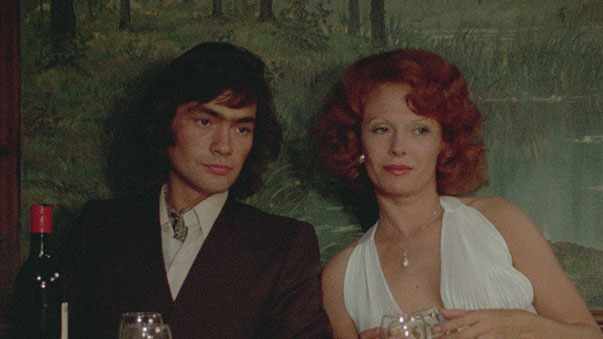
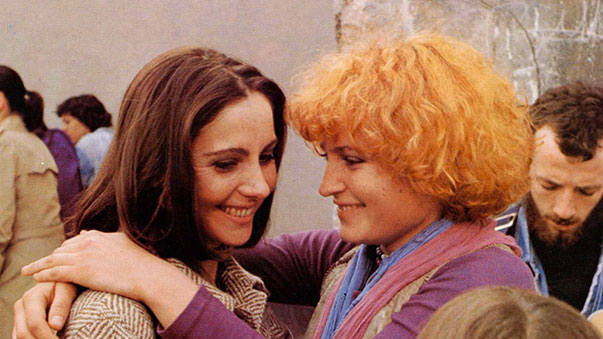
[ANNULE] Avant-première Positif: La Gradiva de Marine Atlan
de Marine Atlan
Film + débat


Documentaire | Allemagne, Argentine | VOSTA | 2019 | 18 min | Cinéma Numérique 2K
de Manuel Abramovich
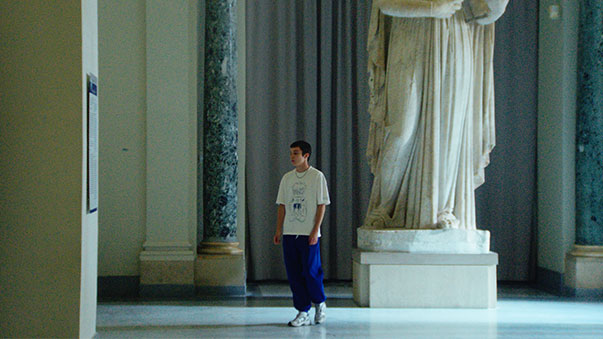
Sept jeunes hommes isolés dans un bar désert avec, pour seule compagnie, une équipe de tournage et le son de leur propre voix. Le dispositif permet au spectateur de scruter tous les micro-mouvements qui traversent leur visage, et c’est bien tentant : que pense tel garçon lorsqu’il s’entend rejouer la façon dont il racole ses clients ? Que ressent tel autre en entendant son propre récit d’une rencontre avec un homme plus âgé alors qu’il n’avait que seize ans ? Les scènes racontées par ces escort boys nous plongent dans leur réalité secrète, mais une fois de plus, rien n’est plus intime que les visages eux-mêmes. Selon les cas, ils semblent adhérer plus ou moins aux propos entendus, livrés en allemand ou en roumain : ils paraissent tantôt fiers, tantôt amusés, tantôt troublés. Mais quoi qu’ils pensent, nous l’apprenons dès le début, les images appartiennent désormais à la production. En scindant son et image, le cinéaste place ses sujets dans une position inconfortable – il est souvent malaisant d’écouter sa propre voix – et les protège tout à la fois. Métaphore exacerbée de la relation triangulaire entre filmeur, filmé et spectateur, Blue Boy est aussi ambigu que les hommes qu’il nous fait rencontrer, oscillant entre la froideur d’un rapport contractualisé et un intérêt bienveillant pour autrui. Mais si Manuel Abramovich magnifie en fin de compte ceux qu’il filme, c’est parce qu’il sait leur rendre toute leur complexité, préserver un mystère qui ne fait que s’épaissir au moment du générique de fin.
–Olivia Cooper-Hadjian
Seven young men alone in a deserted bar with a film crew and the sound of their own voices as their only companions. This device allows the spectator to scrutinise the micro-movements that cross their faces, and it is all too tempting: what is one of the boys thinking when he hears the playback of how he touts his clients? What does another feel listening to his own account of meeting an older man when he was only sixteen? The scenes recounted by these escort boys plunge us into their secret reality, but once again, nothing is more intimate than the faces themselves. Each seems to agree with what they hear, expressed in German or Romanian: at times, they seem proud, at times amused, at times troubled. But as we discover from the outset, whatever they think, the images now belong to the film production. By separating sound from image, the filmmaker not only places his subjects in an awkward position – it is often uncomfortable to hear one’s own voice – but also protects them. A heightened metaphor of the triangular relationship between the filmer, the filmed and the spectator, Blue Boy is as ambiguous as the men that it shows us, oscillating between a contractual relationship and a well-meaning interest for others. But, while Manuel Abramovich ultimately glorifies those he films, this is because he knows how to render them in all their complexity – which becomes even deeper when we read the end credits.
–Olivia Cooper-Hadjian
Documentaire | Autriche, France | VOSTA | 2019 | 85 min | Cinéma Numérique 2K
de Sebastian Brameshuber
Dans son troisième long-métrage, Sebastian Brameshuber recycle à dessein quelques images d’Of Stains, Scrap and Tires (2014), un court tourné en 16mm dans le même garage automobile adossé en contrebas des brumes de l’Erzberg dans les Alpes autrichiennes, plus grand gisement national de minerai de fer dont l’exploitation remonte à l’époque romaine. C’est qu’ici rien ne meurt tout à fait, tout est remploi, récupération et remémoration. Cliff, un mécanicien nigérian, prospecte les parkings à la recherche de véhicules à retaper et à désosser pour les revendre ou les exporter en pièces détachées. Son large hangar à trois pans s’ouvrait autrefois sur un terrain de paintball ; mais ce sont désormais l’Europe de l’Est dont la plupart de ses clients proviennent, et l’Afrique où il écoule modestement ses pièces, qui se profilent à l’horizon. L’observation, l’écoute, l’exploration sereine du travail, des matières, des échanges, des territoires, branchent ce microcosme nigérian sur les rapports économiques de l’Europe et de l’Afrique. Par son approche matérialiste, Brameshuber relie le travail du fer aux esprits telluriques et au contemporain des loisirs. Tandis que la bande-son des forêts nigérianes se superpose aux images des périphéries autrichiennes, le maître du lieu raconte un mythe fondateur qui, sous ses promesses ironiques d’éternité, fait entendre, fin imminente ou recommencements, l’amenuisement des ressources telluriques.
–Antoine Thirion
In his third feature, Sebastian Brameshuber purposefully recycles some images from Of Stains, Scrap and Tires (2014), a 16mm short filmed in the same car business nestled at the foot of the Austrian Alps, below the mists of Erzberg, one of the country’s largest iron ore deposits and mined since Roman times. Here, here nothing dies completely, everything is reused, recovered and remembered. Cliff, a Nigerian mechanic, tours car parks looking for vehicles to recondition and break up, which he then sells or exports as spare parts. Formerly, his large three-walled depot opened onto a paintball field; but now most of the customers on his horizon are from Eastern Europe, and Africa, where his parts find a small market. The calm observation, listening and exploration of labour, materials, exchanges and territories are what connects this Nigerian microcosm to economic relations across Europe and Africa. Through his materialist approach, Brameshuber links the exploitation of iron to the earth spirits and contemporary leisure activities. While the sound track of Nigerian forests is superimposed on the images of Austrian peri-urban areas, the owner recounts a founding myth that, underneath its ironic promises of eternity, speaks of the depletion of terrestrial resources, be it an imminent end or new beginnings.
–Antoine Thirion
Dans le cadre de