20h
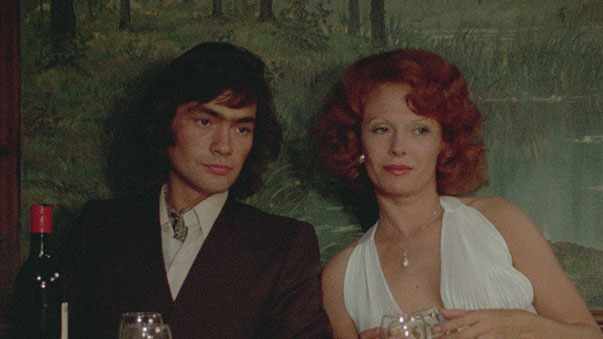
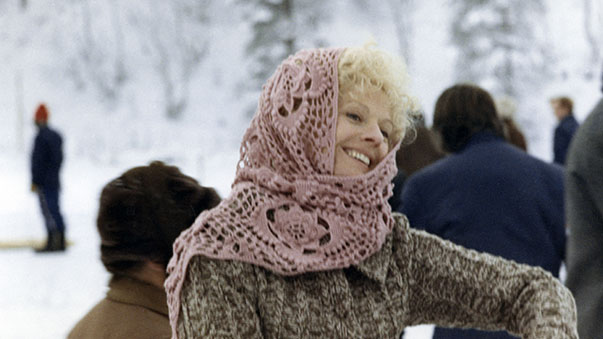
[ANNULE] Avant-première Positif: La Gradiva de Marine Atlan
de Marine Atlan
Film + débat

Documentaire | Canada | SD | 2018 | 16 min | 35mm optique
de Malena Szlam
L’Altiplano est un vaste plateau de la chaîne des Andes au centre de l’Amérique latine, dominée par des volcans en activité. Cette terre qui s’étend sur près de 1500 kilomètres entre la Bolivie, le Pérou, le Chili et l’Argentine, est soumise de longue date à une exploitation minière intensive pour ses réserves de nitrate, qui a déplacé de nombreuses populations. Employant donc la pellicule – 16mm gonflé en 35mm – Malena Szlam recourt à un certain nombre de procédés formels qui rejouent la manière dont la modernité perturbe un ordre ancien. Double exposition, flicker, saturation, inversions, craquements et drones produisent une richesse infinie de couleurs et de textures, suggérant une agitation tellurique de grande ampleur qui se manifestent en phénomènes de calcification, d’étuvage ou de liquéfaction. Décrivant un voyage horizontal du désert aux hautes terres, traversant au passage quelques oasis luxuriantes soufflées par les vents, Szlam rend sensible la multiplicité des strates qui composent ce paysage, des influences gravitationnelles de la Lune aux couches de magma qui mettent ses lacs en ébullition. Horizontal, vertical, linéaire, circulaire : attentive à toute la complexité morphologique, climatique et historique du lieu, Malena Szlam réinvente le film de paysage et fabrique un monde stupéfiant.
–Antoine Thirion
Altiplano is a vast plateau in the Andean Mountains in the centre of Latin America, dominated by active volcanos. This land spanning nearly 1,500 km between Bolivia, Peru, Chile and Argentina has been intensively mined over many years for its nitrate reserves, displacing many communities. Filming in 16mm, blown up to 35mm, Malena Szlam relies on a number of formal processes that reinvent the way in which modernity disturbs the old order. Double exposure, flickering, saturation, inversions, cracking and drones produce an infinite wealth of colours and textures, suggesting a major telluric turmoil that appears in the form of calcification, steaming or liquefaction. Depicting a horizontal journey from the desert to the highlands, crossing a few lush wind-blown oases on the way, Szlam gives a tangible dimension to the multiple strata that make up this landscape, from the Moon’s gravitational influences to the layers of magma that set its lakes boiling. Horizontal, vertical, linear, circular: mindful of all the morphological, climatic and historical complexity of the place, Malena Szlam reinvents the landscape film and creates an astonishing world.
–Antoine Thirion
Documentaire | Suède, Norvège, Danemark | VOSTA | 2018 | 88 min | Cinéma Numérique 2K
de Eloy Domínguez Serén
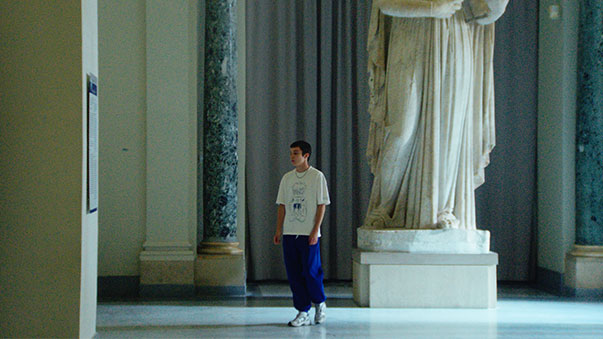
Hamada désigne, en arabe, des plateaux rocailleux et désertiques d’altitude dont le sable a été presqu’entièrement chassé par les vents. Chez les Sahrawis – littéralement "habitants du désert" –, le mot caractérise un état de vide et d’absence de vie. Mais aussi, on le comprend dès l’entame du premier long-métrage d’Eloy Domínguez Serén, leur condition de réfugié depuis que le Sahara occidental, colonie espagnole jusqu’en 1975, a été revendiqué par le Maroc et la Mauritanie. Vivant depuis plus de quarante ans dans divers camps dont celui de Tindouf en Algérie où le cinéaste espagnol a passé plus de huit mois entre 2014 et 2017, ils attendent en vain la tenue d’un référendum pour l’auto-détermination promis par le Maroc en 1991 quand le mouvement de libération Polisario a déposé les armes. Et c’est dans cette attente que Domínguez Serén a imaginé son film en compagnie des jeunes Sahrawis, en particulier Sidahmed et Zaara, l’un tenté par l’affranchissement de l’exil, l’autre par une indépendance plus pragmatique mais non moins pleine d’embûches, tous deux prisonniers d’une vie paradoxale où l’on n’a rien à faire et où pourtant tout est possible. Ce noir tableau laisserait présager un film bien sombre, si Domínguez Serén et ses acteurs n’avaient adopté le parti inverse, de la beauté, de l’ironie, de la complicité et du rire pour partager jour après jour et, bien sûr, sans scénario, l’inventivité d’une génération dite perdue.
–Antoine Thirion
In Arabic, hamada denotes the high stony plateaus where the sand has been almost totally swept away by the winds. For the Sahrawis – literally the “inhabitants of the desert” –, the word designates a state of emptiness and absence of life. But also, as we understand from the start of Eloy Domínguez Serén’s first feature documentary, their status as refugees, ever since Morocco and Mauritania both laid claim to the Western Sahara, a Spanish colony until 1975. For over forty years, they have been living in various camps – including Tindouf in Algeria, where the Spanish filmmaker spent more than eight months between 2014 and 2017 – vainly awaiting the referendum on self-determination promised by Morocco in 1991, when the Polisario liberation movement laid down its arms. It is this waiting that Domínguez Serén imagined as the backdrop to his film, along with a group of young Sahrawis, in particular Sidahmed and Zaara. One is tempted by the freedom of exile, the other by an independence that is more pragmatic but no less problematic. Yet, both are prisoners of a paradoxical existence where they have nothing to do, but everything is possible. This sombre picture would have presaged a very bleak film, had Domínguez Serén and his actors not opted for the opposite approach – one of beauty, irony, complicity and laughter so that day after day and, of course, with no scenario they could share the inventiveness of a so-called lost generation.
–Antoine Thirion
Dans le cadre de
Pour la sixième année consécutive, le Forum des images accueille le Cinéma du réel, le rendez-vous de ceux qui font le cinéma documentaire international d’aujourd’hui.